Short answer: A water-resistant bed slows a spill down; a waterproof bed is meant to stop liquid reaching the foam. For a dog that has accidents, you want a waterproof liner sealed around the foam itself, under a removable washable cover. Read the listing for where the waterproofing is, then test it at home.
Key takeaways
- The words matter. K9 of Mine advises making sure a bed is truly waterproof, not merely water resistant.
- Location matters more. A waterproof outer fabric is not the same as a waterproof liner around the foam.
- Washability decides the long run. K9 of Mine notes beds where only the outer cover is washable are harder to keep clean if the inner cover gets wet.
- Comfort still counts. The same guide points out that a waterproof bed is useless if your dog won't use it.
- Test before trust. A simple paper-towel test tells you more than any label.
Shop this guide
- Orthopedic Dog Bed with Waterproof Liner: a waterproof inner liner around egg-crate foam, a sherpa-style top and a removable cover that zips off for the washing machine.
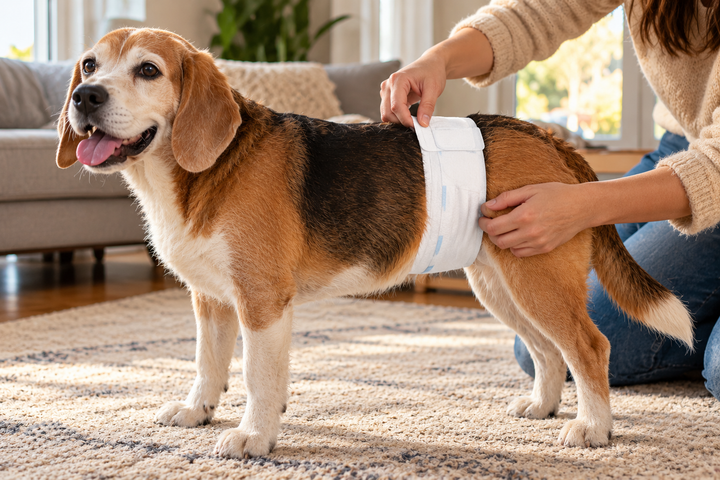
- Disposable Belly Bands for Male Dogs: a first line of defense before liquid reaches the bed.
Zavyro tool
Listing decoder and home test score
Use the decoder while shopping to read what a listing is really promising. Once the bed arrives, run the three-step test and add up the score before your dog sleeps on it.
| If the listing says | It usually means | For a dog with accidents |
|---|---|---|
| Waterproof inner liner | A separate sealed layer around the foam | The feature to look for |
| Waterproof outer cover or fabric | The surface sheds liquid, but seams and zips may let it through | Helpful, but check seams and whether the foam is also protected |
| Water-resistant or water-repellent | Slows liquid down; not designed to stop a soak | Fine for drool and spills, not overnight leaks |
| Easy to clean, wipeable | Surface can be wiped; says nothing about the foam | Not enough on its own |
| Removable, machine-washable cover | The top layer can be washed | Essential, alongside a waterproof liner |
| No mention of water at all | No waterproofing | Add your own waterproof liner or choose another bed |
| Home test step | Pass | Points |
|---|---|---|
| 1. Pour a cup of water on the liner over a paper towel placed on the foam; wait 10 minutes | Paper towel dry | 3 |
| 2. Repeat directly on a seam and near the zipper | Paper towel dry | 2 |
| 3. Lie your hand on the bed and press; listen and feel | No loud crinkle, no clammy feel through the cover | 1 |
6 points: ready for a dog with accidents. 3 to 5: protects against small leaks; add an absorbent top pad. 0 to 2: water-resistant at best; add a separate waterproof liner. This scoring is Zavyro's editorial method, not an industry standard.
Why the difference matters for older dogs
For a young dog, "water-resistant" covers most situations: a wet coat after a walk, a knocked-over water bowl, drool. For an older dog that leaks at night, the situation is different. Liquid sits against the bed for hours. Anything that is only slowing it down will eventually let it through, and once urine reaches the foam, the bed starts to smell and, in most cases, it is on its way out.
K9 of Mine's guide to beds for incontinent dogs puts it plainly: you want to make sure the bed is truly waterproof, not merely water resistant. The rest of this guide is about how to tell the difference before you spend money, and how to check after the bed arrives. For setting up the whole bed system, including covers and pads, see our guide to choosing a bed for an older dog.
Where the waterproofing has to be
A dog bed has three main parts: the outer cover your dog lies on, the foam or fill that gives support, and, on better beds, a liner between them. Waterproofing can sit in any of these, and where it sits changes everything.
Waterproof liner around the foam
This is the layer that protects the expensive part. Liquid that gets through the cover stops at the liner. Our orthopedic dog bed is built this way: its listing describes a waterproof inner liner that shields the foam from spills, accidents and moisture, with a removable cover that zips off for the washing machine. The listing says to spot clean the liner when needed.
Waterproof outer fabric
Some beds use a waterproof or coated fabric on the outside. That helps, but seams, stitching and zippers are the weak points, and liquid can find its way through them. If the outer fabric is the only waterproof layer, check whether the foam is protected separately.
Water-resistant fabric only
Treated or tightly woven fabrics repel splashes. They are useful against drool and spilled water. They are not designed for a soak.
The washability question
K9 of Mine highlights a problem with some designs: when only the outer cover is washable, the bed becomes harder to keep thoroughly clean if the internal cover gets wet. Before buying, look for three things in the listing:
- A removable outer cover that goes in a washing machine.
- Care instructions for the liner, even if it is spot clean only.
- A zip that opens wide enough to get the foam out without a struggle at 3 a.m.
Our bed's listing gives the care routine: wash the cover on a gentle cycle and tumble dry on low; spot clean the liner when needed.
Comfort: the part people forget
K9 of Mine makes a point that is easy to miss: it doesn't matter how waterproof your dog's bed is if your dog won't use it. Some waterproof materials crinkle when a dog moves, feel clammy, or trap heat. An older dog that already sleeps lightly may abandon a noisy bed for the floor.
That is why step 3 of our home test is about sound and feel. A liner under a soft, plush top, like the sherpa-style surface on our bed, keeps the waterproofing out of your dog's way. For the support side of comfort, see orthopedic versus standard dog beds.
DIY fixes if your bed isn't waterproof
If you already own a bed you like, you can often make it work. Embrace Pet Insurance, writing about life with an incontinent dog, lists a pet bed wrapped in a trash bag and covered with blankets as one practical option, along with old towels and rubber-backed bathmats as layers. A trash bag is a stopgap: it crinkles and can trap heat. A purpose-made waterproof liner or mattress protector, cut or sized to the foam, is quieter and lasts longer. Whatever you use, put a washable absorbent pad on top, so most accidents never reach the liner.
Second beds, crates and travel
Many older dogs nap in more than one place: a bed in the living room, another in the bedroom, a crate, the back of the car. A dog that leaks at night may also leak during a long afternoon nap, so the same rules apply to every spot it uses regularly. You don't need an expensive bed in each place, but each one should have a waterproof layer under a washable top.
A flat, flexible waterproof mat is the easiest way to cover secondary spots. Our bed's listing describes a flat, flexible profile, light enough to reposition and slim enough for a crate, bedroom or travel setup. On the road, pack a spare washable pad and a bag for wet laundry; our guide to traveling with an older dog covers the rest of the kit.
A buying checklist
- Find the word "waterproof", not just "water-resistant".
- Find where it applies: liner around the foam is best.
- Check the cover is removable and machine washable.
- Check care instructions for the liner.
- Check the size with our dog bed size calculator.
- Check the base: a non-slip bottom helps a stiff dog get up. Our bed's listing says its bottom grips hardwood, tile and laminate.
- Run the home test when it arrives.
Worked examples
Listing says "water-resistant suede cover, easy to clean"
Decoder: slows liquid, protects nothing underneath. Fine for drool, not for a dog that leaks. Add a separate waterproof liner around the foam, or choose a bed with one.
Bed with a waterproof liner scores 5 on the home test
The seam step let a little water through near the zip. Good for small leaks; place a washable absorbent pad over the zipper end and check the paper towel weekly.
Common mistakes
- Trusting "easy to clean" to mean waterproof.
- Testing only the middle of the liner. Seams and zips are where leaks start.
- Choosing waterproofing over comfort. A noisy, clammy bed won't be used.
- No top layer. Even a perfect liner is easier to live with under a washable pad.
- Ignoring the cause. New or sudden leaking is worth a vet visit, as our belly band listing advises.
FAQ
What is the difference between waterproof and water-resistant dog beds?
Water-resistant materials slow liquid down; waterproof ones are designed to stop it. For a dog with accidents, look for a waterproof liner around the foam.
Is a waterproof cover enough?
Not always. Seams and zips can let liquid through. A separate liner around the foam gives a second barrier.
How can I test whether a dog bed is waterproof?
Pour a cup of water on the liner over a paper towel placed on the foam, wait ten minutes, and check whether the towel is dry. Repeat on a seam and by the zip.
Do waterproof dog beds make noise?
Some liners crinkle. A liner under a thick, soft top reduces it. Check by pressing and listening before your dog sleeps on it.
Can I wash a waterproof dog bed?
Usually the cover goes in the washing machine and the liner is spot cleaned. Follow the care label; our bed's listing gives both steps.
Can I make my current dog bed waterproof?
Yes, with a waterproof liner or mattress protector around the foam and a washable pad on top. Embrace Pet Insurance mentions a trash bag under blankets as a quick stopgap.
Sources and methodology
How the decoder and test work. The decoder maps common listing phrases to what they typically promise. The three-step test and its scoring are Zavyro editorial methods for a quick home check; they are not a laboratory standard.
- K9 of Mine, waterproof beds for incontinent dogs: truly waterproof versus water resistant, beds where only the outer cover is washable, comfort as a condition of use.
- Embrace Pet Insurance, tips for coping with incontinent pets: trash bag under blankets as a stopgap, towels and rubber-backed bathmats as layers.
- Zavyro product listings: bed liner, cover, base and care instructions; belly band guidance on sudden accidents.
Limitations. We have not lab-tested the beds we sell. The home test indicates performance on the day; inspect liners regularly, since materials wear.
Related guides
- How to Choose a Bed for an Older Dog
- Orthopedic vs. Standard Dog Beds: What Actually Matters?
- Dog Bed Size Calculator
- Elevated vs Orthopedic Dog Bed
- Senior Pet Daily Comfort Guide
- Traveling With an Older Dog